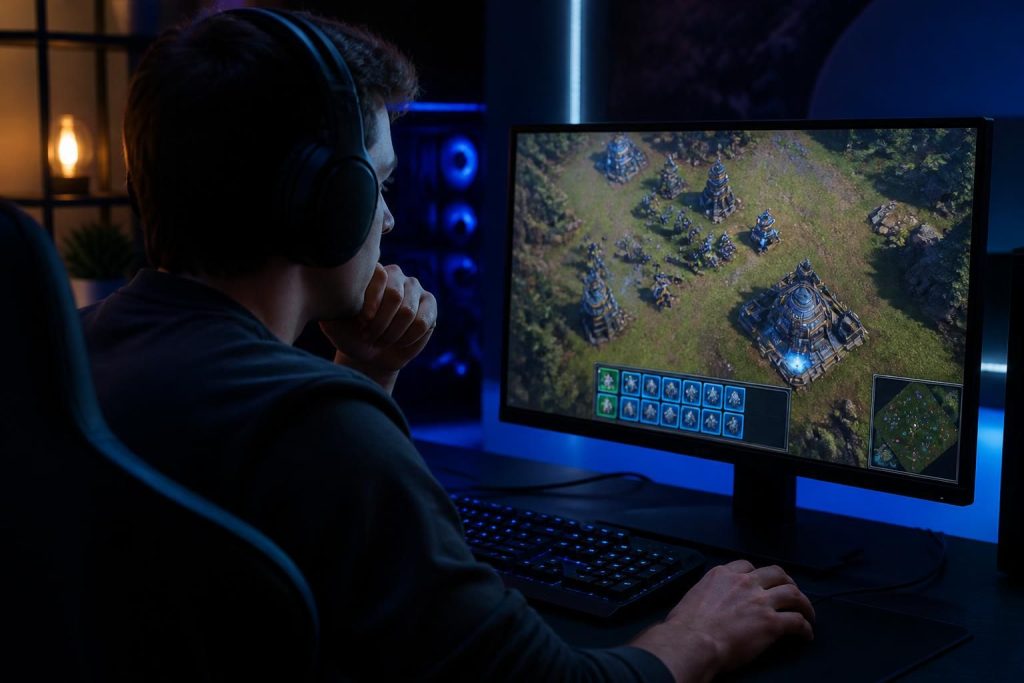

Strategy games and planning skills are intrinsically linked, fostering critical thinking abilities that are invaluable both in gaming and everyday life. As players navigate through complex scenarios, they must employ strategic planning, leading to enhanced problem-solving skills and improved decision-making processes. This article will explore how engaging with strategy games not only entertains but also cultivates essential cognitive skills through various methods and mechanics.
Understanding the Mechanics of Strategy Games
Strategy games provide players with a framework where they must make decisions that impact the outcome of the game. These games often require players to analyze situations, forecast opponents’ moves, and adapt their strategies accordingly. The mechanics are designed to challenge the player’s ability to think critically about their actions and their consequences.
For example, real-time strategy games like StarCraft demand quick thinking and rapid adjustments in planning, as players must gather resources, build units, and outmaneuver opponents in a dynamic environment. Turn-based strategy games, such as XCOM, present a different challenge, allowing players more time to contemplate their moves and develop intricate strategies over multiple turns. Each type of game hones planning skills, reinforcing the need for foresight and adaptability.
The Role of Resource Management in Developing Planning Skills
One of the hallmarks of many strategy games is resource management, which plays a crucial role in enhancing planning skills. Players are often tasked with managing limited resources, such as time, money, or units, while pursuing their objectives. This element requires players to prioritize actions, allocate resources effectively, and make strategic sacrifices, all of which are essential planning skills.
For instance, in Civilization VI, players must manage various resources—like food, production, and culture—to expand their empires and advance through different eras of technology. The ability to plan effectively is vital here, as players must decide how best to allocate their resources for optimal growth and development. This kind of strategic thinking can be beneficial beyond the game, as individuals learn to make decisions under constraints in their personal and professional lives.
Team Strategy Games and Collaborative Planning
Many modern strategy games emphasize teamwork, where collaboration with others is fundamental to success. Games like League of Legends and Overwatch require players to communicate and coordinate their strategies with teammates. This collaboration not only enhances individual planning skills but fosters collective problem-solving abilities.
When working as part of a team, players must consider not only their own strategies but also how their decisions will affect their teammates’ actions. This aspect of gameplay promotes the development of interpersonal skills and strategic communication, as players must negotiate and adapt their plans based on real-time feedback from others. Such collaborative settings mirror many real-world scenarios, where effective planning and teamwork are crucial for achieving shared goals.
Real-World Applications of Planning Skills Developed Through Gaming
The planning skills acquired through strategy games have tangible real-world applications. Players often find that the critical thinking, adaptability, and resource management skills honed in gaming can translate into various fields, including business, education, and leadership roles. For instance, many successful business leaders credit their ability to strategize and make informed decisions to their experiences in gaming.
Moreover, the cognitive benefits of playing strategy games are being recognized in educational settings as well. Some educators incorporate these games into their curricula to engage students in problem-solving and critical thinking exercises. By simulating real-world scenarios, students practice planning skills in a risk-free environment, preparing them for future challenges.
Scientific Insights into Gaming and Cognitive Development
Research into the effects of video games on cognitive development has shown promising results that support the connection between strategy games and enhanced planning skills. Studies indicate that playing strategy games can lead to improved memory, spatial skills, and abstract reasoning. These cognitive abilities are essential components of effective planning.
Neuroscientific research suggests that engaging with complex gaming environments stimulates areas of the brain responsible for executive functions, which include problem-solving, decision-making, and planning. The mental exercise provided by these games can lead to neuroplastic changes, allowing players to become more proficient in critical thinking tasks over time.
For those interested in exploring various cognitive-enhancing games, resources such as สล็อต highlight how certain games can contribute to cognitive growth through strategic gameplay.
Conclusion: The Lasting Impact of Strategy Games on Planning Skills
Strategy games and planning skills are intertwined, forming a foundation for critical thinking that benefits players in numerous aspects of life. From improving individual decision-making to enhancing collaborative teamwork, the cognitive skills developed through these games are significant. As the popularity of strategy games continues to rise, understanding their impact on our planning abilities will become increasingly important, shedding light on how gaming can serve as a powerful tool for cognitive development.
